Piercings I don’t do
…and why!
“But my friend has one and it healed fine” is a phrase piercers hear often.
All procedures carry risks but our job is to try and reduce those risks as much as possible. Although some anatomy may not be suitable for the piercings that I do offer, the placements below are especially notorious for causing problems regardless; therefore I will not risk the health of my clients.
The following photos are not my work.
1. Surface tongue/frog eyes/scoop/snake eyes or any other variation.
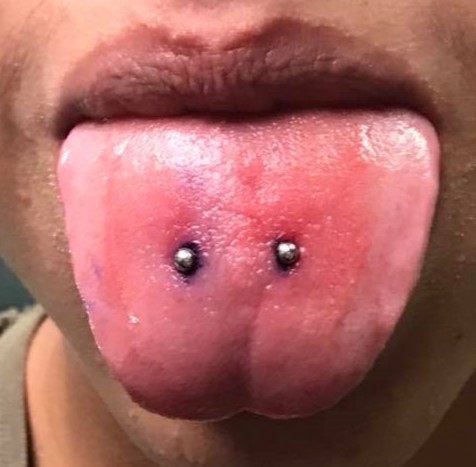
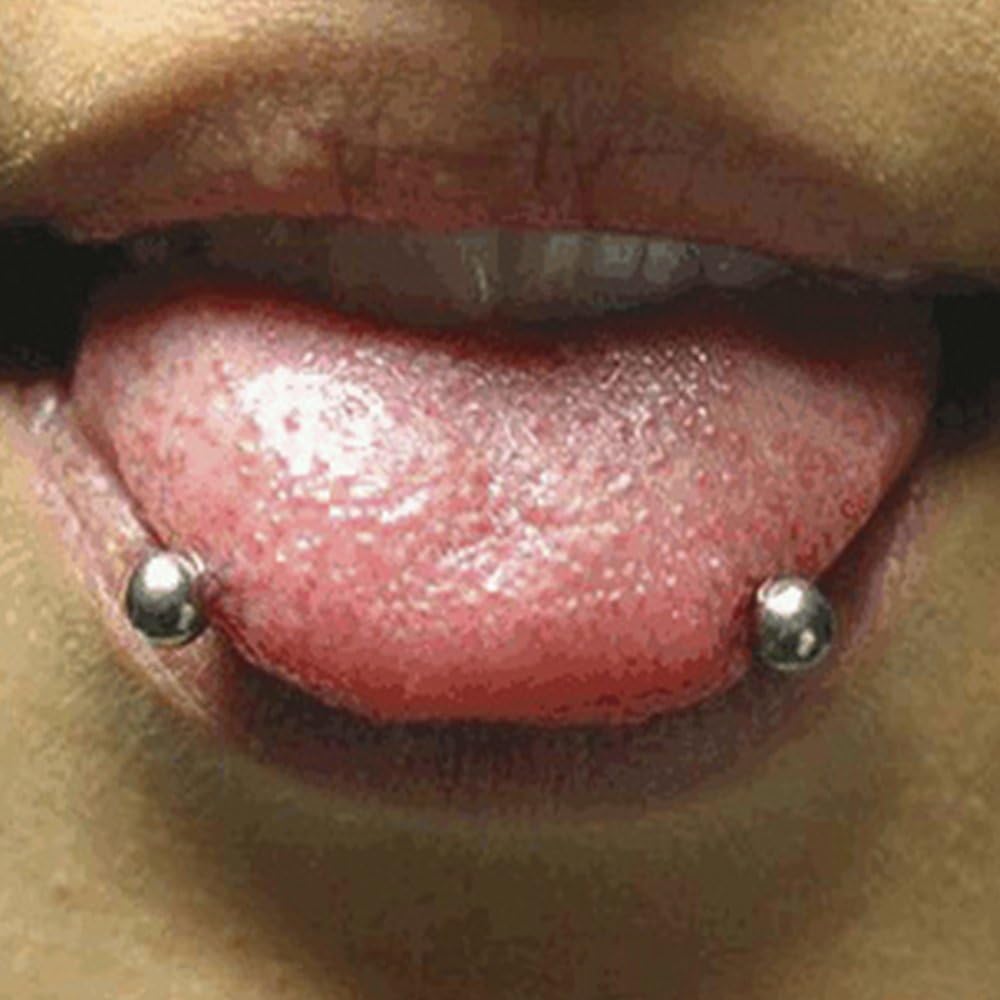
(Left) Surface horizontal tongue (a.k.a. frog eyes or scoop). (Right) Snake eyes.
Commonly requested (and turned away!), these variations of tongue piercing may sometimes look cool but can cause irreversible damage to your oral health. This includes:
Gum erosion
Erosion is a common complication with these piercings as they’re placed in an area that constantly comes into contact with the gums.

It’s true that oral piercings in general do carry this risk. There’s a common misconception that acrylic jewellery will eliminate it because plastic is softer than metal. However, we know that’s not true as plastic is still tougher than the gums. The only ways to help reduce the risk of gum erosion would be to ensure that the piercing is placed in an optimal position for the anatomy and that the jewellery is appropriate and well-fitted; even then there’s no promise. Therefore, these tongue piercing variations would without a doubt cause you issues later on.
Tooth chipping/damage/wrecking-ball fractures
These piercings usually rest on the back of the front upper and lower teeth, which interact during everyday actions.
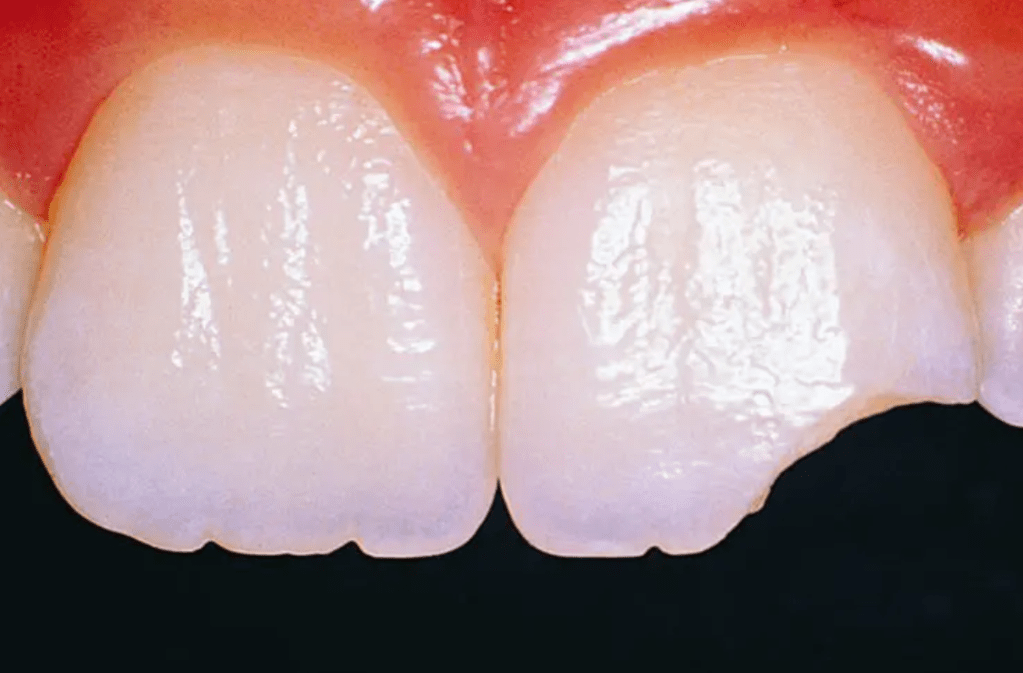
A good way to visualize this is to pronounce “L” – you’ll notice when doing this that the tip of the tongue touches the back of your front teeth. Now imagine adding two attachments into that small space and accidentally biting down on them during an everyday activity, such as eating. Need I say more?
Movement limitation/speech impairment
Wherever a horizontal bar is placed through the tongue, natural movement will be restricted.

The tongue plays many important roles; it assists with swallowing, tasting and speaking, to name a few. Comprised of four pairs of muscles, these are split into two categories; intrinsic and extrinsic. They allow the tongue to move in all different directions which aids with pronunciation and shifting food around the mouth. These piercings would restrict the tongues natural movement and can consequently have an effect on speech and eating.
Migration/rejection/excess scarring
Lastly, due to the uneven pressures placed on the tongue, these piercings are notoriously prone to migration and rejection. If the jewellery isn’t removed promptly this could even cause permanent excess scarring.


2. Nape (or anywhere on the back)/sternum/gill surface piercings.
Nape
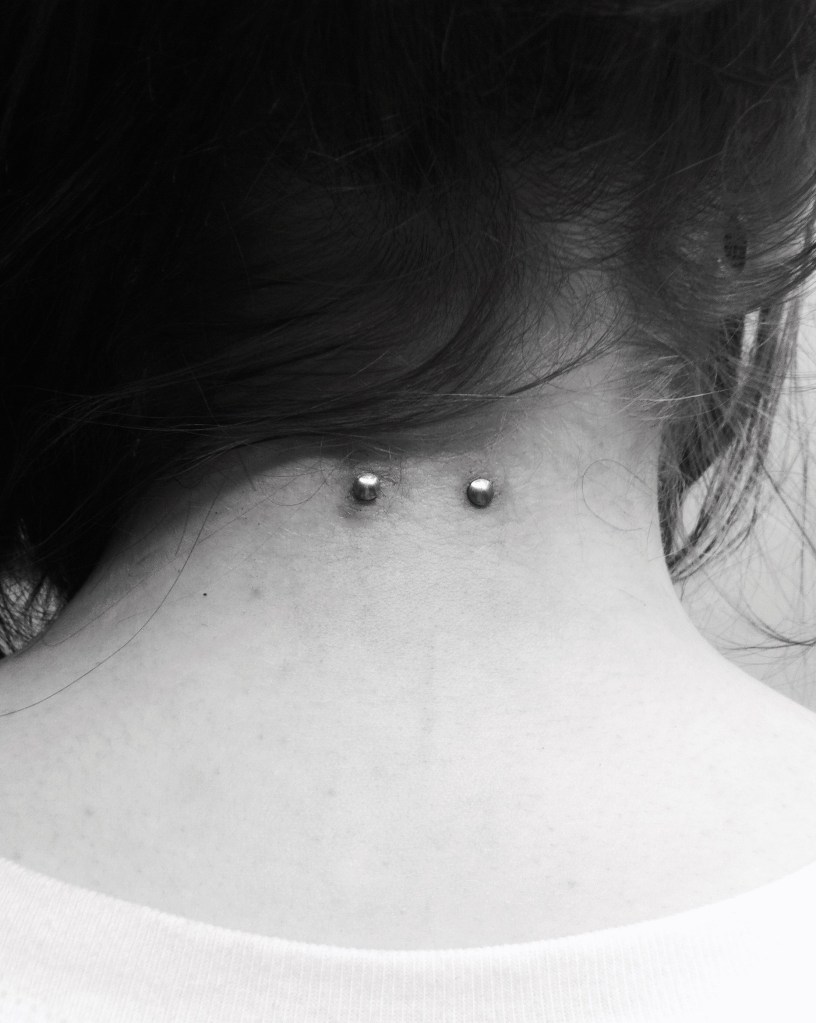
Placed at the back of the neck, this piercing would be extremely difficult (if not impossible) to clean efficiently without assistance.
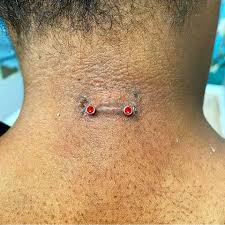
Due to the nature of surface piercings and the high contact/movement of this area, nape piercings are incredibly prone to rejection and excess scarring. Plus, poor visibility could delay you spotting the early signs of a complication.
Sternum

Typically placed on the chest and between the breasts, this placement is particularly prone to irritation and complications.

Scarring and rejection can be particularly excessive in this area due to the delicate nature of the skin on the chest. This is often caused by irritation from uneven pressure, rubbing from a bra, and excess moisture.
Gill a.k.a. Sideburn/Surface tragus piercing
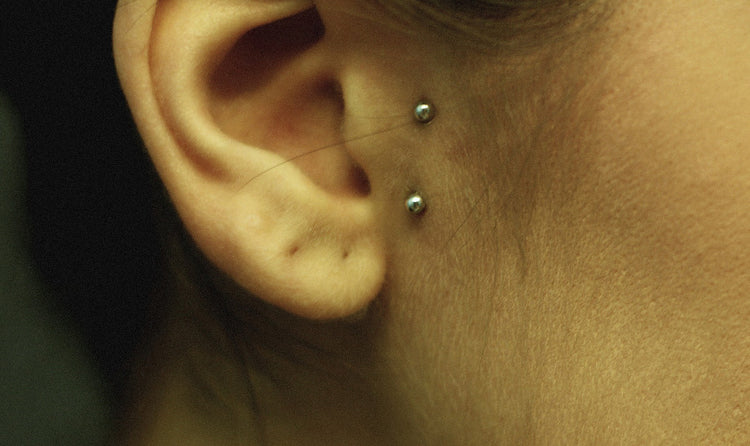
Placed in the gap between the tragus and sideburn, this piercing is particularly prone to rejection, and a nightmare for hairdressers!

Complications usually arise from constant pressure and contact (such as side sleeping.) Similar to other surface piercings, a rejected gill piercing can leave a nasty scar.
3. Any piercing of the arms, legs, hands and feet.
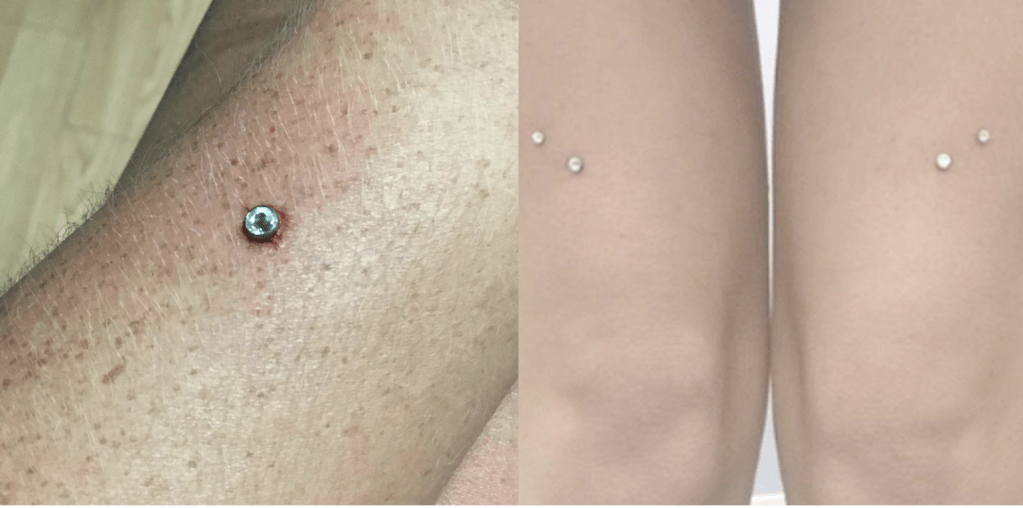
Arms and legs
High contact/movement areas + surface piercings just don’t mix. Constant pressure from all directions are placed on the jewellery, usually causing them to reject fast.
Hands and feet
Luckily this isn’t something I get requested to do often and for good reason; these placements almost guarantee constant irritation and rejection.

Your hands and feet are the first points of contact during everyday activities. The risk of piercing infection in these areas is increased and quick rejection is prevalent from their high-movement nature. Activities such as running your hand through your hair or comfortably wearing closed shoes/socks would inevitably be hindered. Additionally, surface piercings don’t enjoy moisture; the perfect breeding ground for bacteria.
4. Forehead
It’s worth mentioning that dermals in general are known for rejection and scarring regardless of placement and therefore should be considered long-term temporary. Even when I perform cheek and chest dermals, although I personally tend to have more success in these areas, clients are always fully informed of these risks beforehand. With that being said, I do tend to refuse microdermal piercings more than other piercings in general.

This is one I always feel hypocritical about. Although I don’t perform these I do wear three myself. I love them to death and hope they stick with me for many more years, but I’ve seen this placement fail way more often than most with both microdermals and surface bars, and the scarring left can be particularly noticeable.
5. Frowny
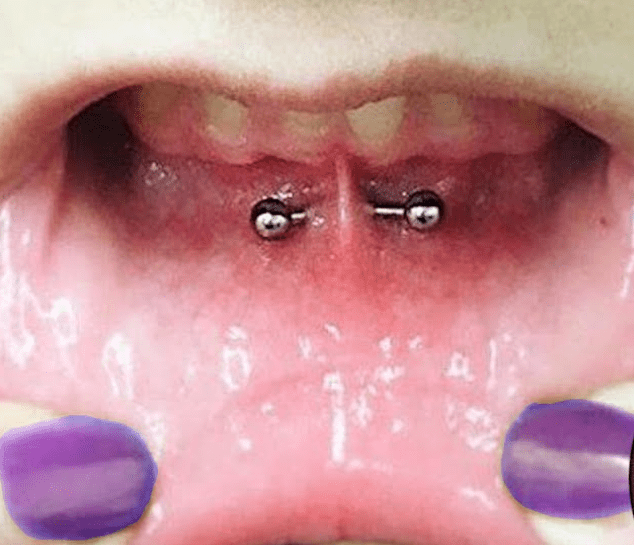
The opposite of a smiley, this piercing is placed through the frenulum of the lower lip. Personally I just think it carries a lot of risk with very little pay-off. Similar to the tongue piercings aforementioned that I don’t do, attachments in this small space that come into constant contact with the gum would most definitely cause unavoidable erosion and tooth damage.
6. Deep shaft piercing
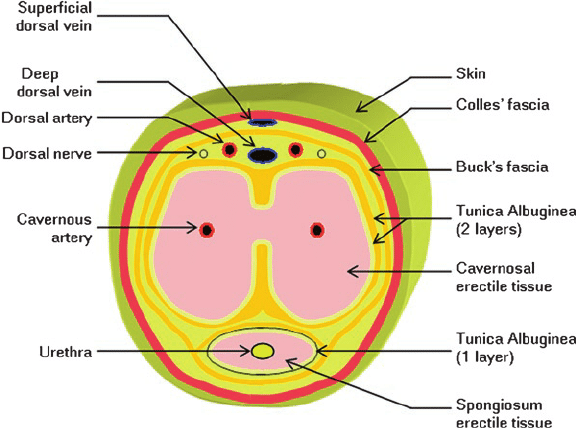
Regularly portrayed alongside more popular (and safer) placements, these rare piercings are performed deeper down the penis shaft and could be considered a deeper variation of an ampallang or apadravya piercing, depending on the orientation.

This cross section of a penis shows the usual locations of arteries and veins that run along the shaft. These deeper structures are harder to locate and therefore can be very difficult to avoid. The risks associated with this piercing would be excessive and uncontrollable bleeding if some of these blood supplies were to be punctured.
7. Transscrotal
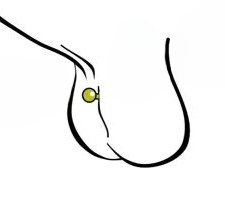
These are considered heavier modifications and are typically placed front-to-back through the scrotum. The correct way to perform a transscrotal ‘piercing’ is to scalpel and suture the skin to create a fistula; both of which I don’t do and would be considered as heavy body modification. Standard needle piercings through the scrotum very rarely heal fully and even if they did would take an extremely long time!
 Hollie Welsh
You must be logged in to post a comment.