Jewellery
At Bejewelled, all jewellery used is internally threaded or threadless, verified implant grade, and polished to a mirror finish. It is sourced, inspected and sterilised by myself in the studio, and I never use or install customers own jewellery. Certificates for all jewellery and their materials/DFARS compliancy are available upon request. A lifetime guarantee covers all jewellery against manufacture defects and workmanship.
Quality control – how and why?
In jewellery production, it’s important that materials and workmanship are of the highest standard. The classic saying “buy cheap, buy twice” can definitely be extended to body jewellery. Not many consumers realize that titanium comes in many grades for example, not all of which are suitable for body jewellery. Therefore, it’s imperative that any claimed properties of a piece are accurate, confirmed and regulated because no one should pay for substandard quality!
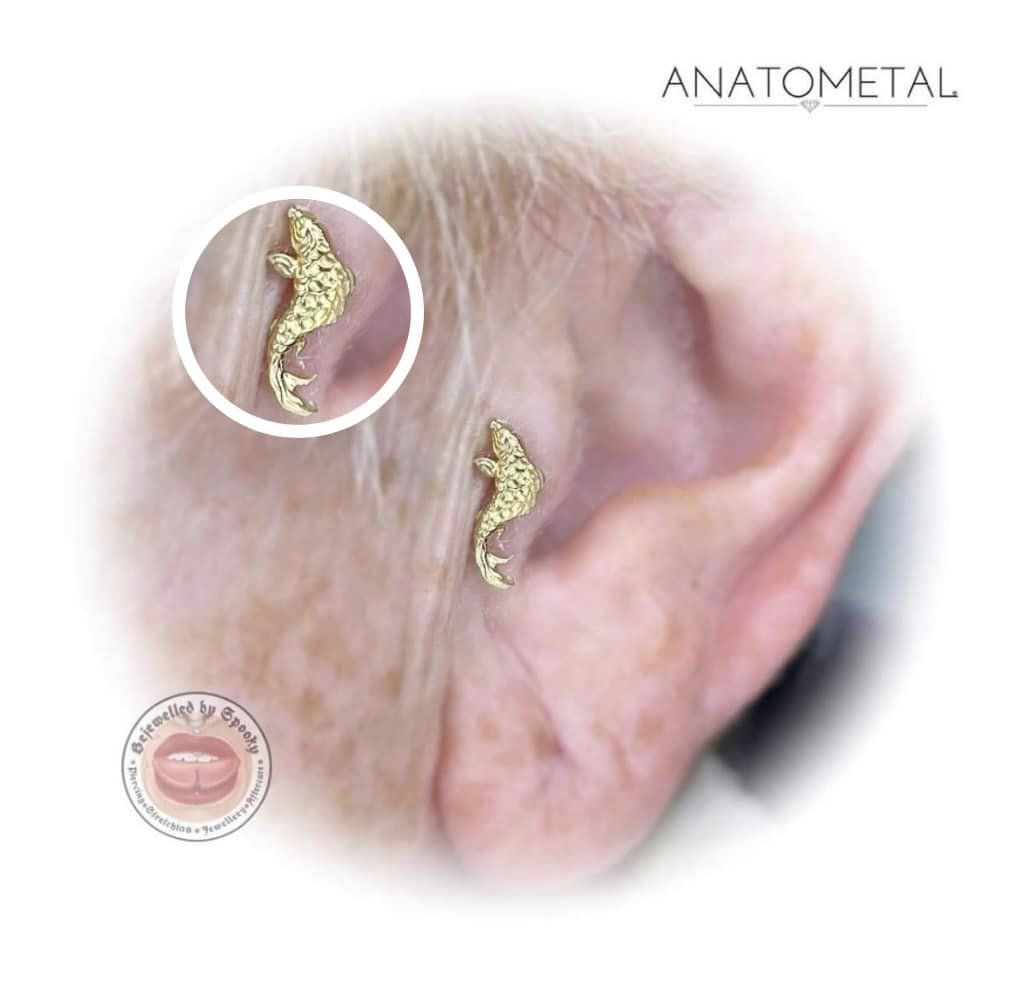
In the piercing industry, three main methods of assurance should be used to assure jewellery quality.
- Only sourcing from reputable brands that care about the source, materials, quality, accuracy and conformity of their jewellery.
All brands used stand behind every single piece they produce and their service is unrivalled. They work relentlessly to design and produce all pieces, and guarantee they will last a lifetime against manufacture defects and workmanship. All materials used can be verified and traced for full transparency and the finish is consistently mirror polished and free from irregularities. They’re also approved by the Association of Professional Piercers who have strict guidelines on quality
2. Mill certificates are documents used in the metals industry to specify the chemical and physical properties of a material and assure its’ quality.
Minimum features should include:
- Contact information for all relevant parties
- Origin of material by country (this is important for point 3)
- The ASTM or ISO standard
- Information about the material submitted: grade, size, form it was provided in, quantity, weight and finish
- Product and chemical analysis
- Heat code
This document shouldn’t be confused with a chemistry test which would only prove the chemistry of a single piece tested, not the entire batch.
Where different sizes of stock are used to manufacture jewellery, there must be corresponding mill certificates that match each thickness and shape of the material; a single certificate therefore would not cover any another variation than what’s stated on it.
However, some not-so-transparent companies rely on the consumers inability to read and understand the relevant documents surrounding quality assurance and have been caught attempting to falsify or be misleading in their verification. This leads us to the next layer of quality assurance…
3. DFARS compliancy (Defense Federal Acquisition Regulation Supplement) is utilized to guarantee that the material sourced is of the grade advertised.
Implant grade materials provided by certain countries can’t be verified as the mills that produce them don’t follow relevant ASTM, ISO or World Health Organization (WHO) criteria. For example, as China, India and Thailand aren’t DFARS compliant countries, any stock produced from these countries wouldn’t be considered safe to use in the body. This is why the material country of origin displayed on a mill certificate is so important and why only looking for ‘PASS’ on paperwork isn’t enough.
Materials
All jewellery stocked is either verified solid implant grade ASTM-F 136/ASTM-F1295 Titanium, pure niobium, glass, 14 or 18k gold, and platinum; all of which are nickel free without hollowing or plating. Gold is available in yellow, white and rose, the latter of which is also cadmium free.
Titanium
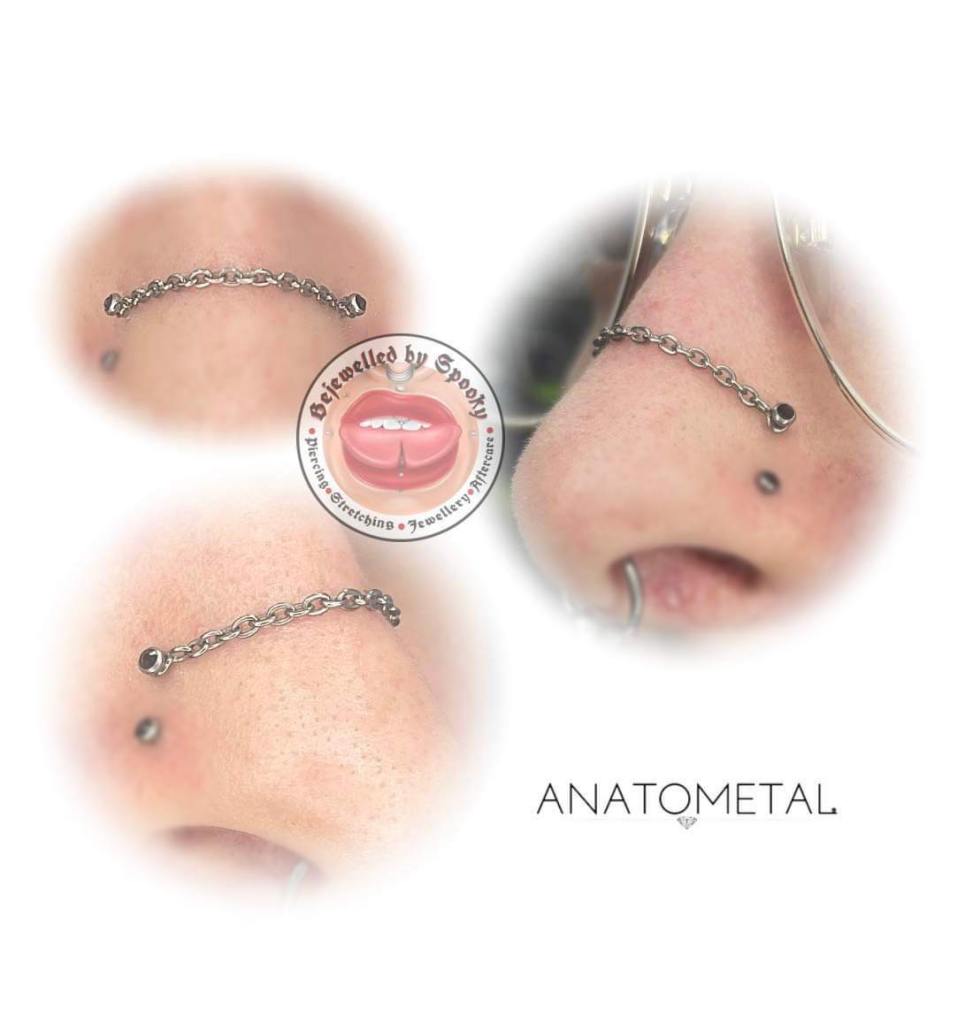
Thanks to its’ non-porous, high strength and scratch resistant nature, high quality, reputable titanium maintains a smooth easily cleanable surface with care. It’s also resistant to corrosion meaning it doesn’t break down in the body, and its’ high bio-compatibility makes it perfect for daily wear and sensitive skin. High quality verified pieces are also becoming more affordable, allowing safe piercing to be more accessible.
Gold
High quality gold is available in 14 or 18karat and is suitable for both fresh and healed piercings (depending on the style of course!)

Karat is a measurement of the ratio of gold to other metals or alloys present in the jewellery. Pure gold is soft by nature meaning it can be scratched, bent or otherwise damaged more easily – not ideal for body jewellery! This is why gold is alloyed with other metals to increase its’ strength and longevity. It’s important that any alloys used do not effect the biocompatibility of the jewellery; something the brands I use work hard to ensure.
For example, 9karat gold only contains 37.5% gold content, whereas 14karat and 18karat contain 58.3% and 75% respectively. Therefore, 14 or 18karat gold tends to be the best middle ground for safe use in body jewellery.
Niobium
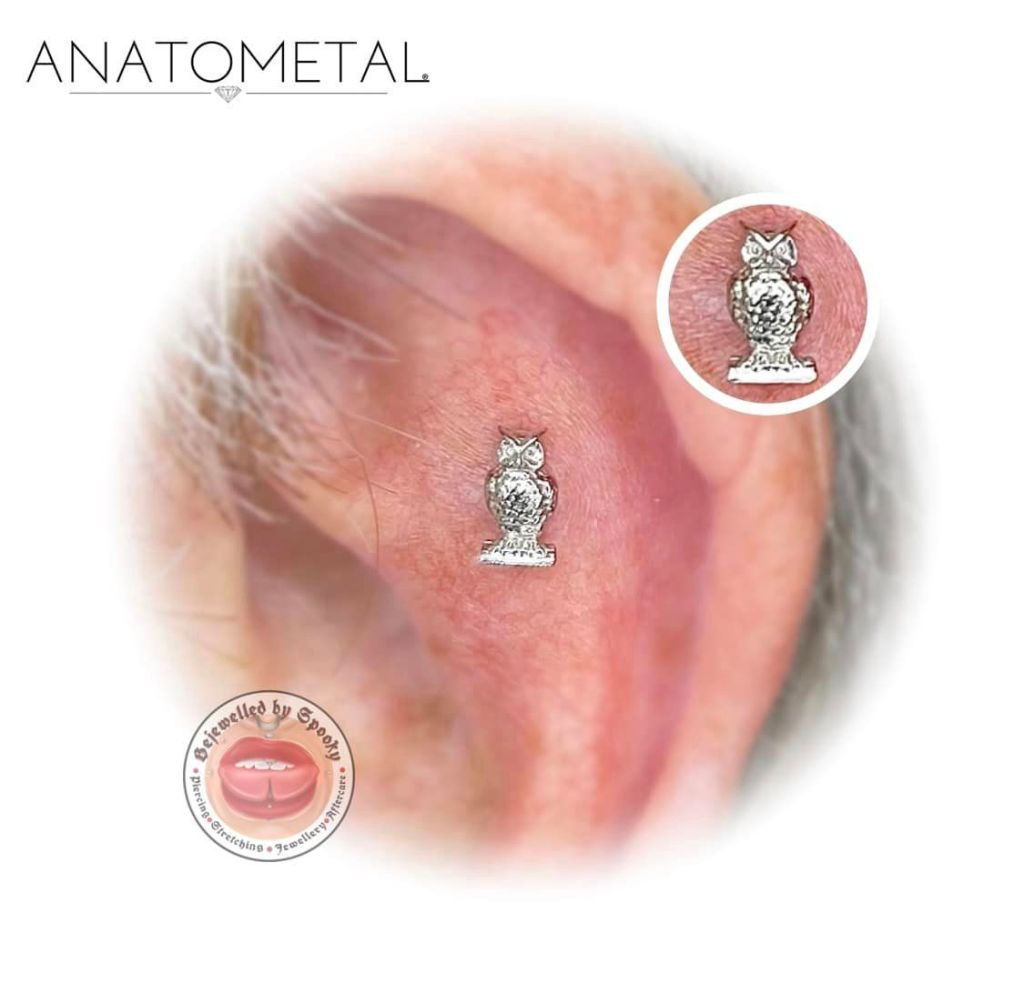
A highly biocompatible metal like titanium, but with the added benefit of being able to be blackened for a safer alternative to plating. This method ensures that the black colour doesn’t flake off or otherwise damage the piercing and involves rapidly heating and cooling of the metal during manufacturer. However it does have its’ limits and jewellery styles available in niobium tend to be quite limited.
Glass & its’ uses
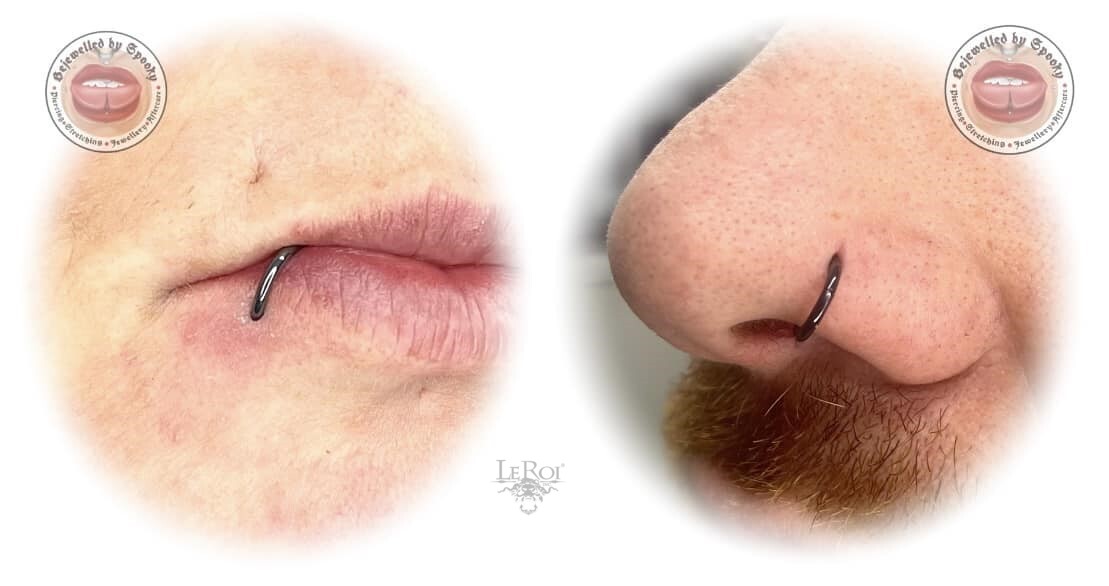
There may be environments, such as school or work, where wearing visible jewellery may not be possible. High quality glass is available in a range of colours including clear and skin coloured. It’s non-porous, extremely smooth and biocompatible meaning it’s also perfect for long-term wear!
Glass is also preferable for stretching and high gauge needle piercings/punches due to its aforementioned properties, and it’s also available in smaller increments for healthier, gradual enlargement. You can create some super cool and unique looks!
Please note: Although glass jewellery is crafted with care and safe to wear daily, it’s not indestructible and may need to be removed during some scenarios; such as playing contact sport. There’s many different types of fit available to minimize jewellery loss but always take care when wearing glass whilst showering, especially if you have a ceramic/porcelain floor! This is to avoid accidental breakage and/or injury if the jewellery was to fall out and crack. You should never wear broken glass jewellery under any circumstances.
Stones & crystals
Any stone/gem/crystals stocked are either genuine Swarovski Crystal, the highest quality cubic zirconia (CZ), genuine/synthetic opal, or natural/synthetic/semi-precious stone. Diamond is available for pre-order and is available either lab grown or natural.

There’s a vast choice of cut and setting types available so if you’re looking for a certain aesthetic, I can definitely help! No glue is used in the manufacturing process which means everything is set by pressure, ensuring longevity and minimizing the risk of stone loss.
It’s important that any stones in jewellery are treated with care. This involves cleaning them appropriately and avoiding application/build-up of certain chemicals; such as tanning products, make-up and hair dye.
I regularly stock an ever-changing range of jewellery in all shapes and sizes to suit a range of budgets and styles. If I don’t have what you’re looking for in stock there’s an extensive catalogue that can be ordered in just for you! For special or unusual requests I always recommend these are arranged during a consultation before any procedures are booked. You can read more about custom jewellery orders here!
Thread types used
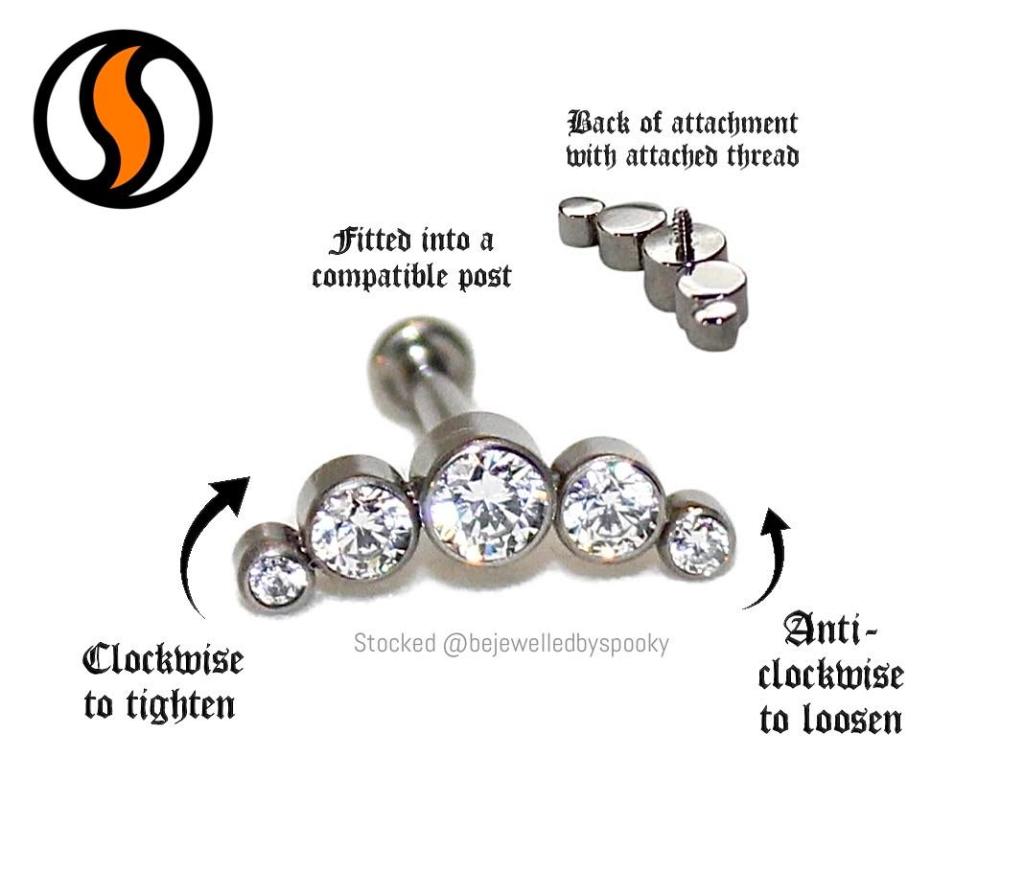
Internally threaded
The thread is on the attachment which screws into the post. With the right tools, this allows for smoother insertion and removal compared to externally threaded jewellery.
To tighten attachment(s) and make sure they remain secure: Hold the post steady and turn the attachment. To tighten on yourself, turn the attachment anti-clockwise. To tighten on someone else, turn it clockwise. The opposites in those scenarios will loosen the attachment.
This thread type is fully interchangeable and cost effective – if you fancy a change you can replace the compatible attachment(s) without replacing the post every time.
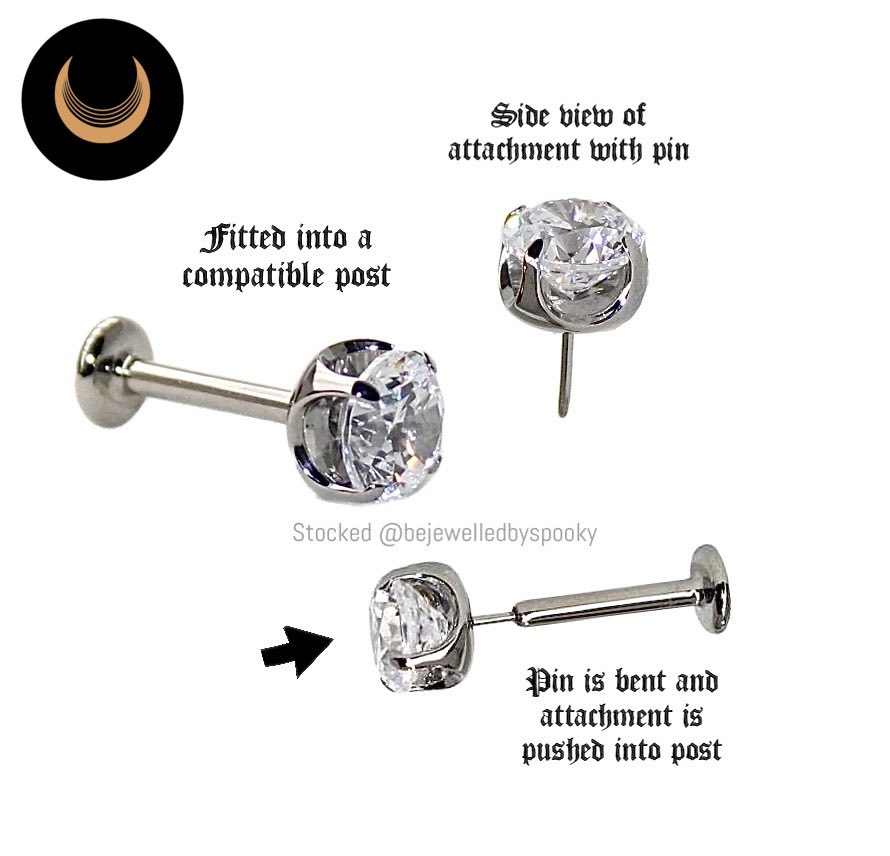
Threadless a.k.a. ‘Push fit’
The attachment has a pin which is bent by me to create tension and pushed into the post (pictured left.) Likewise to internally threaded, this allows for smoother insertion and removal.
To ensure attachment(s) are secure: Hold the post steady and gently push the attachment towards the post. Avoid harsh uneven pressure on the attachment surface as this could cause the pin to snap. When the pin is fully inserted you shouldn’t be able to see a gap between the attachment and the post.
Threadless is also fully interchangeable with compatible attachments, plus in some instances there’s more control over which direction the attachment lays as it doesn’t rely on thread orientation.
Jewellery finish
Arguably the most important aspect of body jewellery aside from material and threading, the finish of the metal plays a major role in aiding uneventful healing by reducing excess irritation (trauma) and discouraging bacteria growth.
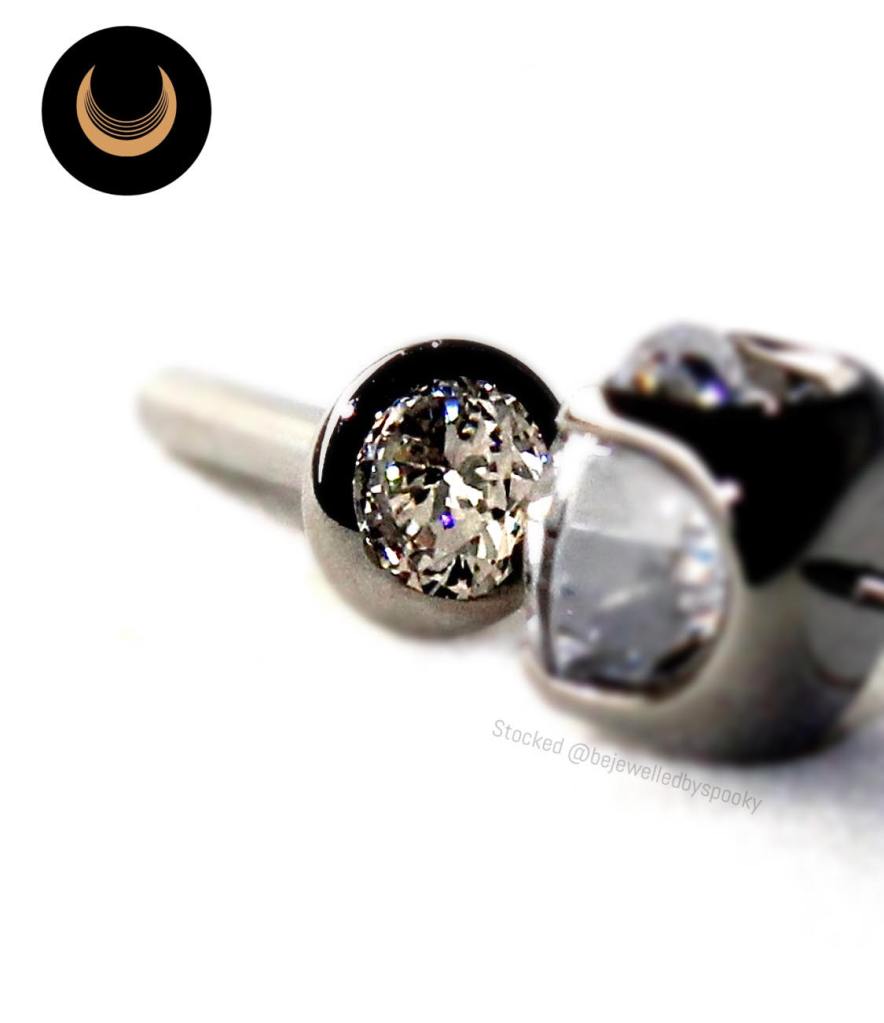
All brands stocked feature a luxurious mirror polish as standard, and work hard to ensure the jewellery is smooth and free from scratches, pitting or impurities. But what does it all mean?
Polish refers to how smooth the jewellery surface is, including parts worn through the body.
Finish refers to the polish of the jewellery plus any additions, such as coating.
Impurities in jewellery refers to contamination of the chemical composition of the piece; low quality materials and workmanship can increase this risk. Chemicals can be mistakenly transferred to the jewellery during the manufacturing stage (from a tool for example) in trace amounts, which would result in a faulty piece that could lead to adverse reactions for the wearer.
Good surface finish refers to a high quality surface that’s smooth, isn’t scratched or pitted and has no impurities. This encourages uneventful healing by minimizing irritation and scarring, and can even speed up the process!
Poor surface finish refers to a low quality surface that’s rough, has scratches/pits, and/or has impurities. This prolongs healing as it causes additional irritation (trauma) to the piercing fistula, can encourage bacteria growth and encourage excess scar formation.
Anodization – Titanium & niobium
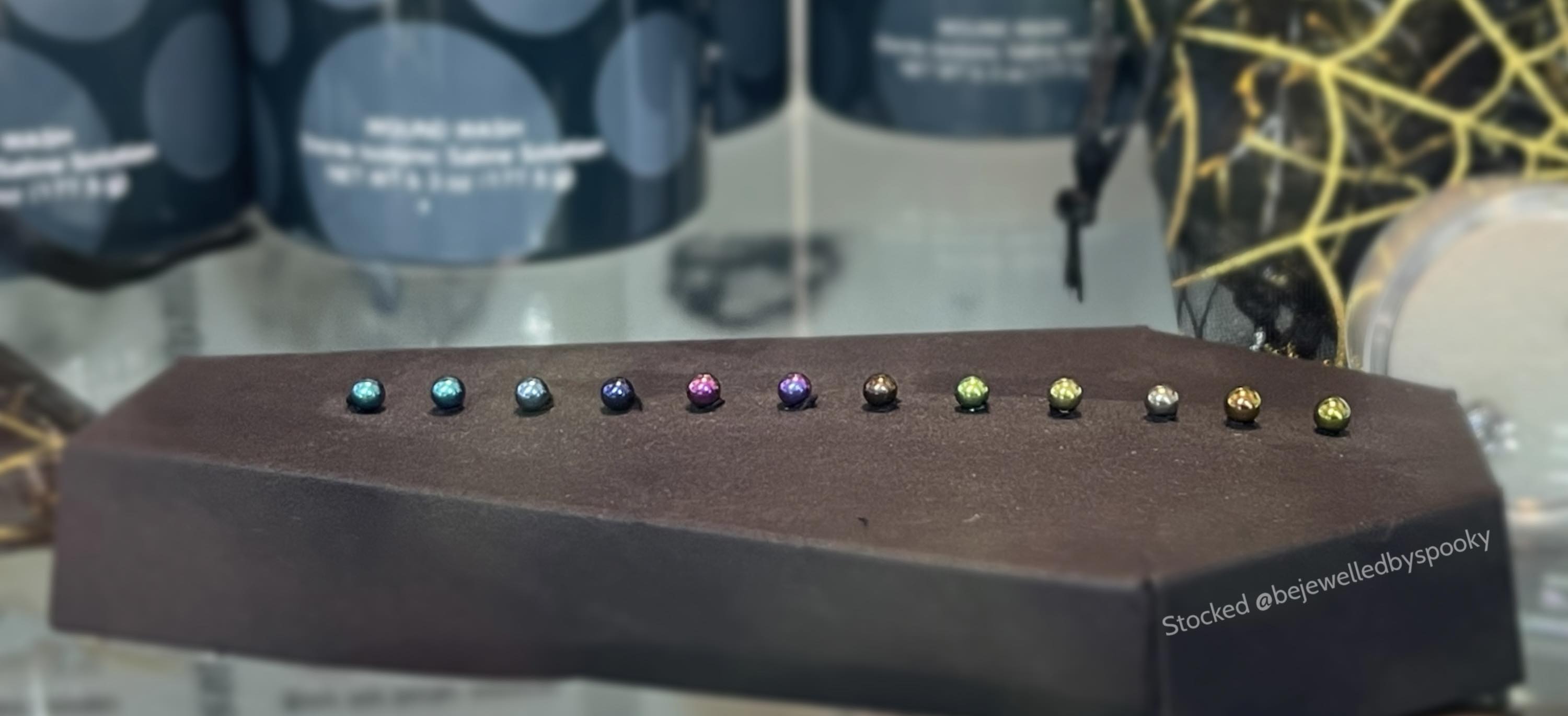
Titanium and niobium are available for pre-order in a range of colours for even more customization options! During anodization, the oxide layer on the surface of the metal is manipulated using electricity to produce an illusion of colour. This process doesn’t affect the bio-compatibility of the metal as it doesn’t involve plating, and can even be used to check for impurities!
Limitations of anodization
Although this finish can last a very long time with care, anodization will generally still fade over time. The speed of this depends on if the jewellery is in a high contact/movement area, exposed to certain chemicals (like hair dye and some face creams) and your skins natural PH level. The good news is that faded, anodized jewellery still maintains its high bio-compatibility and can be re-anodized if required (just cover postage and service fee!)
Red or black anodizing isn’t available for Titanium. The safer option for black jewellery would be glass, blackened niobium (or high quality black rhodium gold) and the alternative for red would be glass. However, creating a red and/or black colour scheme can also be achieved by utilizing a range of stones.
Why I don’t stock butterfly-back earrings
Slowly but surely, butterfly-back earrings are becoming less popular. This is due to a multitude of reasons, including the promising rise in demand for high quality needle piercing and proper jewellery.
The vast majority of jewellery in this style feature mystery mixed metals not suitable for initial or long-term wear in healed piercings, with questionable metal finish. Low quality materials and finish often lead to excessive trauma, scarring and pain at the piercing site.
They’re not very practical either; the post behind the ear can be uncomfortable to lay on, and the excess length can increase the risk of snags and/or migration and rejection.
Sizing is limited and the jewellery is often not long enough to comfortably fit the piercing fistula, leading to embedding. Typically thinner than the industry standard (including thin ‘sleeper’ hoops), they increase the risk of migration and/or rejection, causing piercings to sag or droop over time.
Lastly, if you fancied a change you’d have to purchase a new post every. single. time. Who wants to do that when you can have an interchangeable flat back labret instead and just change the end(s)?
Why I prefer to avoid plastics
Reputable plastic retainers or products that can be autoclave sterilized can be useful in a pinch for temporary wear if required, such as for surgery. I can source it if absolutely necessary, but I usually recommend glass where appropriate (especially if you require more surgery in future.) With that being said, unfortunately the vast majority of plastic jewellery online is unfit for wear beyond temporary.
Polymethyl methacrylate is most commonly referred to as PMMA. PMMA is the most commonly used synthetic polymer advertised as “acrylic” for ‘body jewelry’ and other purposes. Pure PMMA is used in surgeries due to its biocompatibility – however that implant grade is very expensive to stock and difficult to source, so many manufacturers use cheap mixed plastics/low non-implant grade PMMA that is not suitable for wear/implant. Many of these additives have been known to be carcinogenic – cancer causing.
Plastic is also pliable and easily scratched, meaning they are the perfect breeding ground for unwanted bacteria. Over time they can slowly break down, causing irritation and absorption of harmful chemicals into the body.
Many websites still advertise these materials as safe for long-term wear which is simply not true – even if you were to use plastic as a regular retainer you’d be advised to swap it to a new one every 2/3 weeks. There’s a plethora of photos online showing various plastic jewellery pieces in stages of degradation and discolouration.
Despite the myths, unfortunately plastic in oral piercings won’t save your mouth from gum erosion. Anything tougher than the gum will wear it down from constant friction and contact. The only way to reduce the risk of oral damage is to ensure that the piercing placement compliments the anatomy well and the jewellery is sized appropriately.
Medical treatment/testing – MRI, X-ray & surgery
Always consult with your doctor or medical professional to establish if your piercings need to be removed/changed.
If you have to go for an MRI scan, many practitioners prefer their clients to not wear any metal in the scanner. Glass is a perfect alternative for this scenario as it lacks magnetic properties.
In some instances you may still need to remove jewellery for scans if the placement of the jewellery obscures the area being observed.
If you needed surgery, you may be able to wear retainers, but this would depend on the nature of the procedure and the area being operated on.
Swapping to a suitable retainer of the same thickness is recommended to ensure that the piercing fistula (hole) doesn’t shrink and allows for a smooth jewellery change once the retainer is no longer needed.
Why I don’t recommend silver (including Sterling)
Many people don’t realise silver isn’t body-safe for extended periods of wear and definitely isn’t recommended for new or healing piercings.
Regularly wearing silver jewellery through or on the body can lead to a condition called argyria; this presents as discolouration of the skin directly and surrounding the area where the jewellery lays due to repeated exposure to microscopic silver compounds that absorb into the body. Usually blue/green/grayish in colour, once this blotching has been established it’s impossible to remove. There are a couple of ways to minimize the appearance of argyria but this would only be a temporary ‘fix’, such as swapping to appropriate, high quality jewellery with a bigger attachment to cover or distract away from the discolouration.

Additionally, the ‘925’ commonly seen on silver jewellery isn’t a hallmark but rather a stamp to signify that the item contains 92.5% sterling silver; and even then that isn’t a guarantee as any jeweller can stamp onto jewellery. A genuine hallmark can only be applied by professionals who are able to independently check each piece, and once verified, can stamp that piece with a logo that’s been created specifically for that jeweller. However, this is a paid service and a hallmark is only legally required for silver jewellery that is over 7.78 grams in weight, so this step of verification often gets skipped.
Why I don’t recommend PVD coated jewellery
I don’t stock PVD coated jewellery including ‘evil black’ and ‘zircon gold’ for example – it’s the cheapest and most common black jewellery found in non-reputable piercing studios. Physical Vapour Deposition (PVD) is a technique used to deposit thin films of one atom (or molecule) at a time onto a metal surface. Many manufacturers use PVD coating in jewellery to conceal low quality metals underneath, which over time can chip or flake off inside your piercing, leaving an uneven surface and causing exposure-related reactions.
For alternatives to black PVD, please see “Limits of anodization” above.
“Can I change my own jewellery?”
As agreed in your consent form, changing the jewellery by yourself is done so at your own risk and I cannot be held accountable for any adverse reactions. If you think you need a downsize or fancy a change of aesthetic, I strongly recommend that you return to the studio so that the piercing can be assessed and jewellery correctly sized. This way appropriate jewellery can be sourced, inspected, sterilised and fitted by myself. Stock varies so please contact me in advance if you’re looking for anything specific.
You can book in for my insertion/removal service at your convenience. If your piercing was performed by me then the insertion/changeover procedure is free and you only pay for the jewellery. If it wasn’t pierced by me there’s a small charge of £5 to cover the cost of equipment.
“Can I wear someone else’s jewellery?”
You should never wear jewellery that has been worn by someone else, regardless of the circumstance. Simply cleaning the jewellery using home remedies won’t remove their tissue, blood or bacteria and this would inevitably be transferred to your piercing. To prevent infection and adverse reactions, stick to your own.
“Can I buy jewellery online?”
Whilst physically possible, it’s not recommended unless you know exactly what you’re looking for and that you can source it from a reputable, verified brand – which can be tricky! The styles available from reputable brands online for general purchase are usually very limited as the brands used do not sell directly to the public.
I offer a jewellery viewing/consultation service where we can discuss your ideas in full and I can recommend pieces suited to your style and budget. Pretty jewellery without the faff! Also available is my custom jewellery order service where you can have access to the full catalogues and receive tailored advice. If you’re not able to collect I can usually deliver or post for a small fee, but only if I know exactly what’s needed.
“Does my jewellery need any maintenance?”
Yes. Your jewellery may need to be cleaned and polished often to clear away any debris, such as dead skin cells or makeup. If you’d prefer, this can be done in the studio under my jewellery cleaning service from just £5.
Anodized jewellery and stones/crystals/fauxpal require extra care to preserve the colour and finish. This involves avoiding direct exposure to harsh chemicals and ensuring minimal friction against the surface, which could cause the colour to fade over time. However, the good news is that jewellery can be re-anodised if needed!
Top tip: Always create a barrier between jewellery and chemicals if there’s a risk they’ll come into direct contact. If you’re having your hair dyed for example, let your stylist know so they can take extra care to avoid the area.
“What’s covered by the lifetime guarantee?”
A lifetime guarantee means just that; your jewellery is guaranteed to last a lifetime! This covers important aspects such as threading and finishes against manufacturer defects and workmanship for peace of mind.
“What isn’t covered by the lifetime guarantee?”
As stated in your consent form, it’s your responsibility to ensure that all attachments are securely fitted. Therefore, attachment loss that isn’t caused by a faulty thread wouldn’t be covered under the guarantee and you would be expected to pay for a replacement.
Accidental damage isn’t covered by the lifetime guarantee – these pieces are made to stand the test of time but they’re not indestructible so they must be treated with care.
Have you got a question? Write to me at bejewelledbyspooky@outlook.com or find us on Facebook here! No questions are silly and they could just help someone wondering the same thing!
 Hollie Welsh
You must be logged in to post a comment.